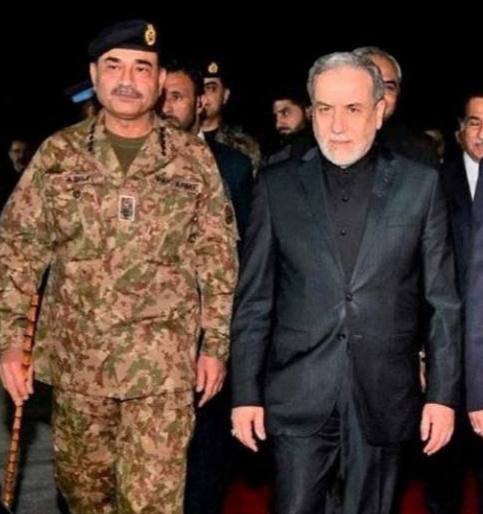
In the frantic coverage of breaking news from the Middle East, Western media often focuses on the visible: missile trajectories, diplomatic statements, and strategic calculations. When reports emerged that Pakistan’s Field Marshal Asim Munir would meet Iran’s Foreign Minister Abbas Araqchi in Tehran—reportedly carrying a message from American officials—the headlines centered on geopolitical maneuvering. What nearly every Western outlet missed, however, was a detail that may matter more than any policy position: both men carry the title “Seyyed.”
This is not a ceremonial footnote. In the Islamic world, and particularly across Iran and South Asia, “Seyyed” (or “Syed”) signifies claimed patrilineal descent from the Prophet Muhammad through his daughter Fatima and cousin Ali. For over fourteen centuries, this lineage has carried profound weight—not as a claim to political power, but as a covenant of ethical responsibility. To be a Seyyed is to inherit a legacy of honor, justice, and service. And in moments of crisis, that legacy shapes how leaders negotiate, whom they trust, and what they will accept.
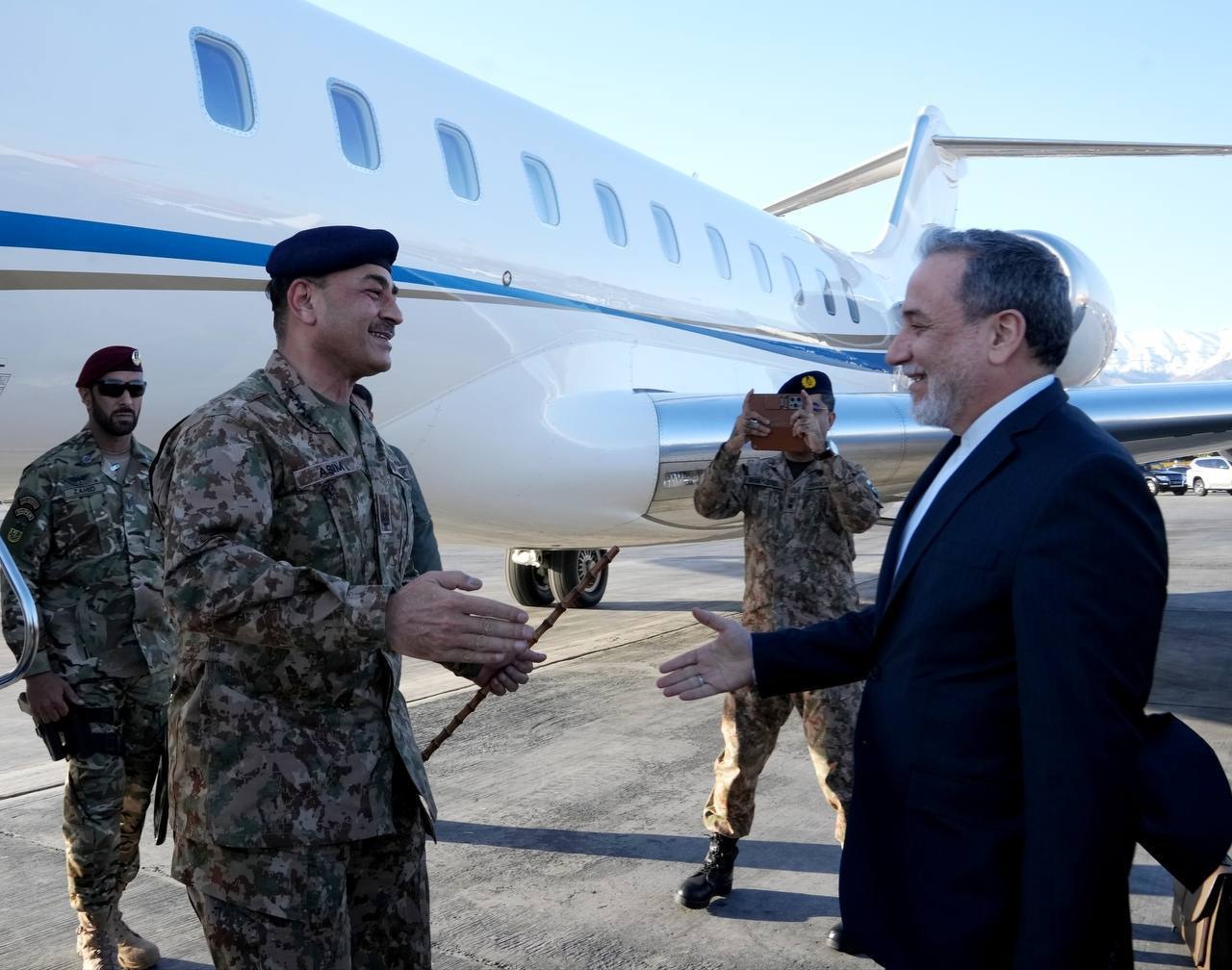
Field Marshal Munir’s arrival in Tehran might be framed as a routine diplomatic shuttle, a backchannel effort amid heightened tensions. But to view this encounter solely through the lens of realpolitik is to miss the deeper current running beneath the surface. Both Munir and Araqchi are not just state officials; they are men whose identities are anchored in a religious and cultural tradition that prioritizes moral integrity over expediency.
Western journalism, trained to prioritize secular frameworks and institutional analysis, often overlooks how faith, lineage, and honor continue to drive decision-making in Muslim-majority societies. The Seyyed connection between these two men is precisely the kind of “small thing” that gets edited out of cables and headlines—but it may be the very factor that determines whether a message delivered in a Tehran meeting room translates into trust, or into rejection.
To understand why this matters, one must step outside the Western paradigm of diplomacy. In South Asian and Iranian Muslim cultures, the Seyyed lineage is not merely genealogical; it is a social contract. Historically, Seyyeds have been expected to embody the Prophetic example: to speak truth to power, to defend the vulnerable, and to uphold justice even at personal cost. This expectation is not enforced by law, but by community memory—a collective understanding that those who bear this name are held to a higher standard.
For Abbas Araqchi, Iran’s Foreign Minister, this heritage is woven into his public identity. The title “Seyyed” precedes his name in official Iranian communications, signaling not just religious affiliation but a commitment to ethical statecraft. His career—from nuclear negotiator to chief diplomat—has unfolded against the backdrop of a nation that views resistance to injustice as a core Islamic value. When Araqchi engages with foreign powers, he does so not only as a representative of the Iranian state, but as a bearer of a legacy that demands any agreement align with principles of dignity and fairness.
Field Marshal Asim Munir carries this heritage through a different cultural lens. Raised in a devout Punjabi family, his father a respected religious scholar, Munir’s identity as a Syed is reinforced by personal practice: he memorized the Quran, and his marriage to a Syeda—a woman also of Prophetic descent—deepens his connection to this tradition. In Pakistan, where religious identity profoundly influences public trust, Munir’s lineage lends him a form of moral authority that transcends his military rank. When he speaks, many hear not just a general, but a man accountable to a centuries-old standard of honor.
Here lies the critical insight Western analysts often miss: for leaders who identify as Seyyed, any diplomatic engagement—especially with a power like the United States, historically viewed with suspicion in the region—must satisfy a deeper criterion. It is not enough that a deal serves strategic interests. It must also pass the test of honor. Does it uphold justice? Does it respect the dignity of the parties involved? Does it reflect the ethical principles that the Seyyed tradition has defended for generations?
This is not abstract theology. It is a practical framework for negotiation. When Munir delivers a message from American officials to Araqchi, the substance of that message will be evaluated not only for its political feasibility but for its moral coherence. A proposal perceived as coercive, disrespectful, or unjust will struggle to gain traction—not because of ideological rigidity, but because accepting it would violate the ethical covenant embedded in both men’s identities.
In this light, the Seyyed connection is not a quaint cultural detail; it is a filter through which trust is built or broken. For Araqchi, engaging with a fellow Seyyed from Pakistan may create a space of shared understanding—a recognition that certain lines cannot be crossed without betraying a deeper commitment. For Munir, carrying a message between adversaries is not merely a tactical assignment; it is a test of whether he can facilitate dialogue that honors the principles his lineage represents.
The tendency to sideline such factors stems from a broader epistemological gap. Western media and policy circles often operate within a secular, rationalist framework that treats religion and lineage as private matters, irrelevant to “hard” diplomacy. This blind spot leads to misreadings: agreements that seem logically sound on paper fail because they ignore the cultural grammar of honor; overtures that appear sincere are rejected because they do not acknowledge historical grievances framed in moral terms.
Moreover, the Seyyed tradition does not fit neatly into categories of “sectarianism” or “identity politics” that Western observers often apply to the Muslim world. It is neither a political ideology nor a marker of division; it is a transnational ethic of responsibility. Missing this nuance leads to analyses that are technically accurate but strategically shallow.
The meeting in Tehran offers a powerful reminder: international relations are not conducted in a cultural vacuum. Systems of meaning—religious, historical, ethical—shape how leaders interpret events, assess risks, and build trust. When two Seyyeds sit across from one another, they bring to the table not just national interests, but a shared language of honor that can either enable breakthrough or reinforce impasse.
For policymakers and journalists alike, the takeaway is clear: understanding current events in the Muslim world requires more than tracking troop movements or parsing official statements. It demands attention to the invisible architectures of faith, lineage, and moral expectation that guide decision-making. Small details—like a title before a name—are often the keys to unlocking larger truths.
As the world watches Tehran, the question is not only what message Munir carries, but whether that message can meet the ancient standard that both he and Araqchi inherit. In a region weary of broken promises and imposed solutions, the answer may depend less on power than on principle—and on whether those who bear the name of the Prophet’s family can find, in this moment, a path that honors both justice and peace.