
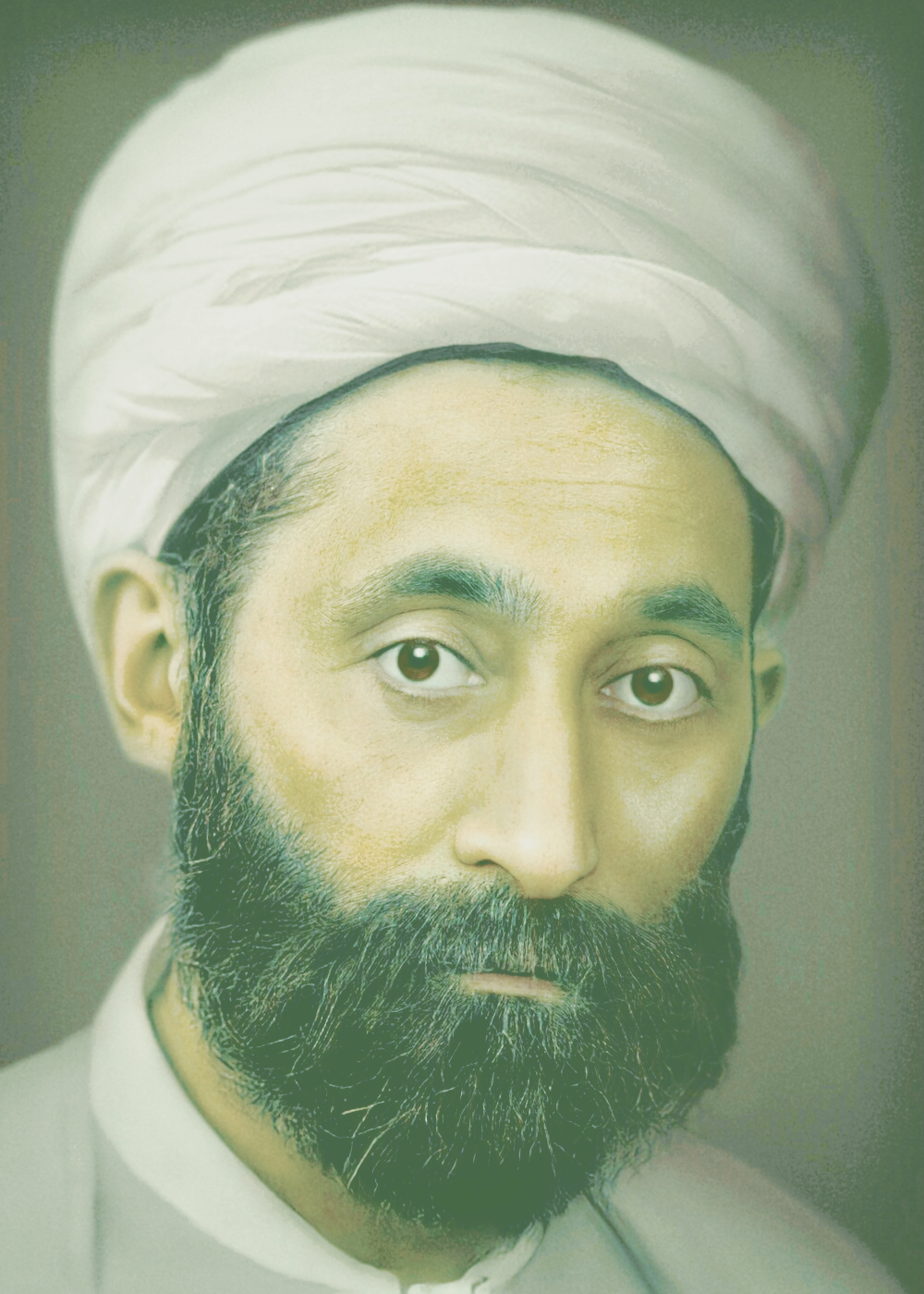
The Pulpit and the Pen
The intersection of religious scholarship and anti-colonial resistance constitutes one of the most understudied yet structurally vital dimensions of twentieth-century liberation movements. In the Maghreb, where French colonial policy systematically dismantled indigenous educational, judicial, and linguistic institutions, Islamic scholars emerged not merely as custodians of doctrine but as architects of national consciousness. Among these figures, ʿAbd al-Ḥamīd Ibn Bādīs (1889–1940) stands as a paradigmatic case. Founder of the Association of Algerian Muslim Scholars (AEMS), pioneering journalist, and pedagogue, Ibn Bādīs orchestrated a reformist project that transformed religious revival into a mechanism of political resistance. His trajectory illuminates a broader historical pattern: across colonized societies, religion frequently functioned as the primary epistemological and organizational framework for liberation. This article examines Ibn Bādīs’s intellectual and institutional praxis, situating his work within the wider role of religious scholars and Sufi networks in anti-colonial mobilization, and arguing that Islamic reformism in Algeria provided a counter-hegemonic discourse that preserved identity, legitimized resistance, and laid the groundwork for postcolonial statehood.
Colonial Erasure and the Reformist Revival
French expansion into Algeria, beginning in the early nineteenth century, was accompanied by a deliberate project of cultural and administrative assimilation. Indigenous Islamic courts were marginalized, Arabic was progressively excluded from public life, and traditional religious education (zaouias and madrasas) were either co-opted or dismantled. In this context, the preservation of Algerian identity required an intellectual and institutional response. The Islamic reformist movement (al-salafiyya al-iṣlāḥiyya), inspired by the transnational networks of Jamāl al-Dīn al-Afghānī and Muḥammad ʿAbduh, offered precisely such a response. Reformists argued that Muslim societies had declined not because of Islam itself, but because of doctrinal stagnation, syncretic practices, and the abandonment of rational engagement with scripture. This intellectual current found fertile ground in the Maghreb, where scholars recognized that religious revival and national survival were inextricably linked. Ibn Bādīs’s project emerged directly from this milieu, translating reformist theology into a structured program of pedagogical, journalistic, and political resistance.
ʿAbd al-Ḥamīd Ibn Bādīs: Pedagogical Resistance and Institutional Founding
Born into a prominent Constantine family with deep religious and judicial lineage, Ibn Bādīs received rigorous training in Quranic exegesis, Arabic grammar, and Islamic jurisprudence before traveling to the University of Ez-Zitouna in Tunis, where he graduated first in his class in 1911. His subsequent encounters in Medina and Cairo with reformist intellectuals, including Muḥammad Rashīd Riḍā, cemented his conviction that scholarly activism was essential to communal survival. Upon returning to Algeria, French authorities swiftly prohibited his public lectures, recognizing the subversive potential of independent religious instruction. Undeterred, Ibn Bādīs pivoted to alternative institutional forms: he established Arabic primary schools, organized evening classes for adults, and pioneered women’s education, recognizing that social transformation required the intellectual emancipation of all demographics.
In 1931, Ibn Bādīs and seventy-two scholars founded the Association of Algerian Muslim Scholars, articulating a tripartite slogan that would become the ideological cornerstone of Algerian nationalism: “Islam is our religion, Arabic is our language, Algeria is our homeland.” The AEMS pursued a dual mission: doctrinal purification and national mobilization. It combated colonial assimilation by restoring Arabic literacy, reasserting Islamic ethical frameworks, and dismantling syncretic practices that had historically fractured communal cohesion. Ibn Bādīs further leveraged the press as a vehicle for ideological dissemination, founding or editing periodicals such as Al-Shihāb, Al-Muntaqid, and Al-Baṣāʾir, and collaborating with diaspora intellectuals in France to establish cultural clubs. His political stances remained unequivocally anti-assimilationist: he called for an Islamic Congress in Algeria (1936), refused to endorse French war efforts during the Second World War, advocated boycotts of colonial institutions, and successfully mediated the 1940 Constantine riots to prevent sectarian violence. Each of these actions demonstrates how religious scholarship was strategically deployed to construct a unified national subjectivity.
Religion as the Architecture of Liberation: Scholars, Networks, and Moral Legitimacy
The Algerian case reflects a broader historical reality: in contexts where colonial powers monopolized secular institutions, religion frequently served as the only viable infrastructure for mass mobilization. Islamic scholars operated as intellectual vanguards, translating theological concepts into political praxis. Mosques became classrooms, religious festivals became sites of political assembly, and clerical networks functioned as decentralized communication channels that colonial surveillance could not easily penetrate. The moral authority of scholars lent legitimacy to resistance, framing anti-colonial struggle not as mere political rebellion but as a religious and ethical imperative. This dynamic was not unique to Algeria; similar patterns emerged across the colonized world, from the ʿUlamāʾ of British India to the nationalist clergy of Vietnam and the Islamic reformers of West Africa. In each instance, religion provided a vocabulary of dignity, a framework of historical continuity, and an organizational matrix that transcended tribal or regional fragmentation.
Ibn Bādīs’s project exemplifies this architecture. By insisting that Arabic literacy and Islamic creed were non-negotiable pillars of Algerian identity, he constructed a cultural bulwark against colonial erasure. His emphasis on education was not merely pedagogical but epistemological: reclaiming the right to define one’s own historical narrative, theological boundaries, and civic values. The AEMS’s collaboration with secular nationalist organizations, such as the Star of North Africa, further illustrates how religious and political liberation movements operated symbiotically, each providing resources the other lacked. Scholars supplied ideological coherence and grassroots networks; political organizers supplied strategic direction and international advocacy.
The Sufi-Reformist Dialectic in Anti-Colonial Mobilization
Any discussion of religion and liberation in the Maghreb must account for the historical role of Sufi orders. For centuries, Sufi brotherhoods functioned as decentralized socio-spiritual networks that frequently organized armed resistance against foreign incursions. Figures such as Emir ʿAbd al-Qādir in Algeria, the Sanusiyya in Libya, and ʿUmar al-Mukhtar in Cyrenaica exemplify how Sufi spiritual authority, moral discipline, and translocal networks were mobilized for military and political resistance. Sufi rebels drew upon concepts of spiritual striving (jihād al-nafs), communal solidarity (ṭarīqa), and divine mandate to legitimize armed struggle, often operating outside formal state structures.
Ibn Bādīs’s relationship to Sufism reflects the reformist movement’s complex negotiation with these traditions. He vigorously opposed what he termed “innovational” Sufism: shrine visitation for supplication, veneration of saints, ritual dancing, and philosophical interpretations that, in his view, distorted scriptural intent. Yet his critique was not a wholesale rejection of Islamic spirituality; rather, he distinguished between what he considered “authentic Sunni asceticism” and practices he deemed superstitious or theologically compromised. This nuanced stance underscores a broader reformist dialectic: the desire to purify religious practice while simultaneously harnessing spiritual authority for national mobilization. Where Sufi orders historically provided decentralized, charismatic leadership, Ibn Bādīs sought a centralized, text-based, and pedagogically driven model of resistance. Both approaches served liberation, but they operated through different epistemologies and organizational logics. Recognizing this dialectic prevents the historiographical flattening of Islamic anti-colonialism into either purely mystical rebellion or secular nationalism; instead, it reveals a pluralistic ecosystem of religious mobilization in which reformist scholars and Sufi networks occasionally competed, frequently intersected, and ultimately contributed to the same emancipatory project.
Legacy and Historiographical Implications
ʿAbd al-Ḥamīd Ibn Bādīs died in Constantine in April 1940 at the age of fifty-one, but his institutional and ideological legacy endured. Algerians commemorate April 16 annually as the Day of Science, a testament to his conviction that intellectual emancipation precedes political liberation. His writings, including Quranic exegesis, theological treatises, and pedagogical manuals, were compiled by his students and continue to inform Algerian educational and religious curricula. Historiographically, Ibn Bādīs’s life challenges secular-nationalist narratives that marginalize religion as a pre-modern relic or a tool of reactionary politics. Instead, it demonstrates that Islamic reformism functioned as a modernizing, anti-colonial force that articulated sovereignty, identity, and civic virtue through indigenous epistemological frameworks. His project also raises critical questions for contemporary postcolonial studies: how do we account for liberation movements that were neither Marxist nor liberal-democratic, but fundamentally rooted in religious scholarship? How did pedagogical revival function as political resistance? And what does the Sufi-reformist dialectic reveal about the pluralism of anti-colonial Islam?
The life and work of ʿAbd al-Ḥamīd Ibn Bādīs exemplify the transformative capacity of religious scholarship in contexts of colonial domination. By founding educational institutions, leveraging the press, and articulating a tripartite national identity, he constructed an intellectual architecture that preserved Algerian sovereignty under conditions of systematic cultural erasure. His trajectory reflects a broader historical reality: across colonized societies, religion has frequently served not as an opiate, but as a catalyst for liberation, providing moral legitimacy, organizational networks, and counter-hegemonic discourse. Whether through the decentralized mobilization of Sufi rebels or the centralized pedagogical activism of reformist scholars, Islamic traditions in the Maghreb and beyond have repeatedly demonstrated their capacity to adapt, resist, and regenerate. Ibn Bādīs’s legacy reminds us that liberation is never solely a matter of political rupture; it is equally a project of intellectual reclamation, moral reorientation, and cultural continuity. In an era where postcolonial identities continue to negotiate the legacies of empire, the scholarly activism of figures like Ibn Bādīs remains indispensable to understanding how religion, reform, and resistance converge in the making of modern nations.
