Leaked files implicates UK’s operatives in Yemen

by Kit Klarenberg * Yemen’s civil war, considered the world’s gravest humanitarian crisis, appears to be nearing its end due to a China-brokered detente between Iran and Saudi Arabia, who support opposing sides in the bitter conflict. Early signs suggest that the rapprochement between Tehran and Riyadh may not only end hostilities in Yemen, but Read more

Continue Reading

Algeria’s intractable neutrality in the context of global polarization

by Hossam Hamza Algeria’s constant insistence on embedding the principles of non-alignment and positive neutrality in its foreign policy expresses its realization of the intractability of understanding the pattern of its dealing with the dynamics of polarization at the level of the international system. It is intended to achieve the aspirations of the party making Read more

Continue Reading

The unpublished security clauses of the Iran-Saudi deal and its implication on regional and global security

The public statement that announced the deal between Iran and Saudi Arabia contains only the contours of a detailed deal whose terms are guaranteed by China and whose terms will be revealed gradually in the next few weeks. One such details concern the long terms security agreement as well as the immediate action to be Read more

Continue Reading
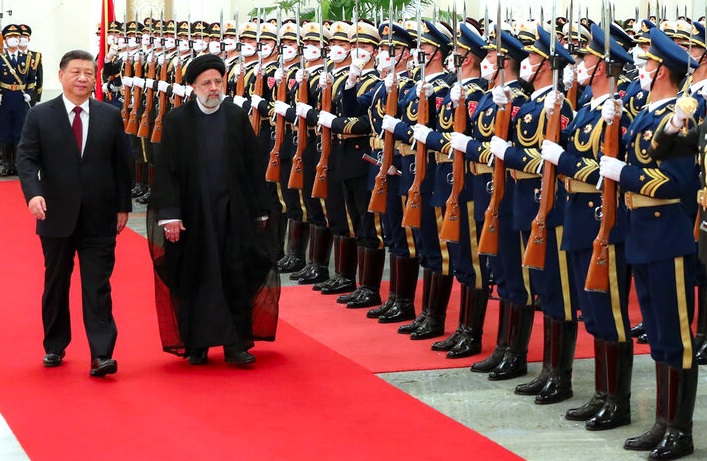
Raisi and Xi in China

Where is Iran’s position in the Russian war against NATO?

by Emad Abshenass * When the former Soviet Union collapsed, and the eastern bloc called the “Warsaw Pact” collapsed, there was hope to end the role of the North Atlantic Treaty Organization (NATO) and start a new era of international relations, based on dealings between countries instead of hostility, with the starting point of competition Read more

Continue Reading

Religion, Politics, and Conflict

Russia’s Complex Challenges: Secularism, Christianity, Islam, Wahhabism, and War  For most of the last 1000 years Russia’s rulers have had a complicated history with religion, in general and with Islam in particular. While Islam has origins in the region that go back more than 1100 years, the relationship with the Ottoman Empire, Salafi Islam in Read more

Continue Reading

The Limits and the Potential of the Shanghai Cooperation Organization

A meeting among leaders of the Shanghai Cooperation Organization (SCO) member states, during any other year in the past, would not make the news. This year’s meeting, however, should matters. Yet, it was hardly covered in Western media. There are important reasons for why the world should pay attention to this 21-year-old intergovernmental organization (IGO). Read more

Continue Reading

The energy and food crises are not direct outcomes of just the war in Ukraine

The energy and food crises are not direct outcomes of just the war in Ukraine. The energy and food crises are connected to many other unaddressed critical issues. Thereforre, they must be addressed holistically. The conflict between Russia and the West that was exacerbated by Russia’s military intervention in Ukraine must not be understood as Read more

Continue Reading

The Russian Approach to the Global and Regional Challenges: Consolidating Moscow’s Power in the New World Order

by Mohamed Ibrahim The 1997 National Security Concept of Russia identified Russia as an “influential European and Asian power” and recommended that Russia maintain an equal distance in relations with global European and Asian economic and political actors, while the 2000 Foreign Policy Concept referred to the Russian Federation as its “superpower.” Responsibility for maintaining Read more

Continue Reading

Western bloc to keep moving heaven and earth to exhaust Russia: another world war has just begun

by Walid Sharara* Whoever doubts that the war in Ukraine is a global proxy war still, should review the positions issued by American and Western officials over the past few days. They no longer hesitate to reveal the actual objectives of the war they are waging against Russia. The revealing statement made by US Defense Read more

Continue Reading

Russia’s Decision to Counter Western Sanctions by Requirement Payments for Russian Goods by National Currency is Exceedingly Significant

When direct military intervention is not a feasible option, US administrations and Western allies always used economic and financial tools to achieve their foreign policy goals. Imposing sanctions has become a reflexive, automatic reaction against any government that resists the current world order—the one dominated by Western liberalism. Such Western addiction to sanctions and embargoes Read more

Continue Reading