The Paradox of Power
By Ahmed Souaiaia
In the annals of modern conflict, a persistent fallacy plagues the strategic calculus of superpowers: the belief that kinetic dominance equates to political victory. As the United States and Israel engage in escalated hostilities against Iran, the Trump administration faces a stark reality that transcends the battlefield. While military machinery may secure tactical advantages, war is ultimately a contest of narratives, legitimacy, and endurance. The current campaign, characterized by the assassination of state leadership, catastrophic civilian casualties, and a vacuum of moral justification, suggests a conflict that is militarily winnable but strategically lost. For a presidency reliant on public support and global standing, this war presents a paradox where every bomb dropped deepens the deficit of honor, ensuring that while battles may be won, the war itself is unwinnable.
The foundational weakness of this engagement lies in the absence of a compelling strategic narrative. Armed conflicts can be sustained by superior firepower, but they cannot be won without a story that resonates with the domestic populace and the international community. Historically, successful American military interventions were prefaced by justifications that garnered overwhelming public consent. The Gulf War launched by George H.W. Bush, for instance, began with approval ratings hovering near 76 percent, driven by a clear narrative of liberating Kuwait and upholding international order. Yet, even with that initial mandate and a decisive military victory, the narrative eroded over time, contributing to his electoral defeat. Similarly, the younger Bush launched the Iraq War on the premise of an imminent nuclear threat, securing initial majority support. As that narrative collapsed under the weight of falsehoods, the mission became a political albatross, remembered more for the “Mission Accomplished” irony than for strategic success.
In contrast, the current administration offers no such fresh justification. The rhetoric relies on residual animosity stemming from the 1979 fall of the Shah, a historical grievance that holds little weight with a demographic born decades after the revolution. This reliance on an archaic narrative ignores the reality that younger generations, who bear the brunt of economic and human costs, do not share the Cold War-era anxieties of their predecessors. Without a new, credible casus belli, the war lacks the political oxygen required for long-term sustainability. The administration is attempting to fight a modern war with a forty-year-old grudge, a strategic mismatch that guarantees a collapse in public support as the costs mount.
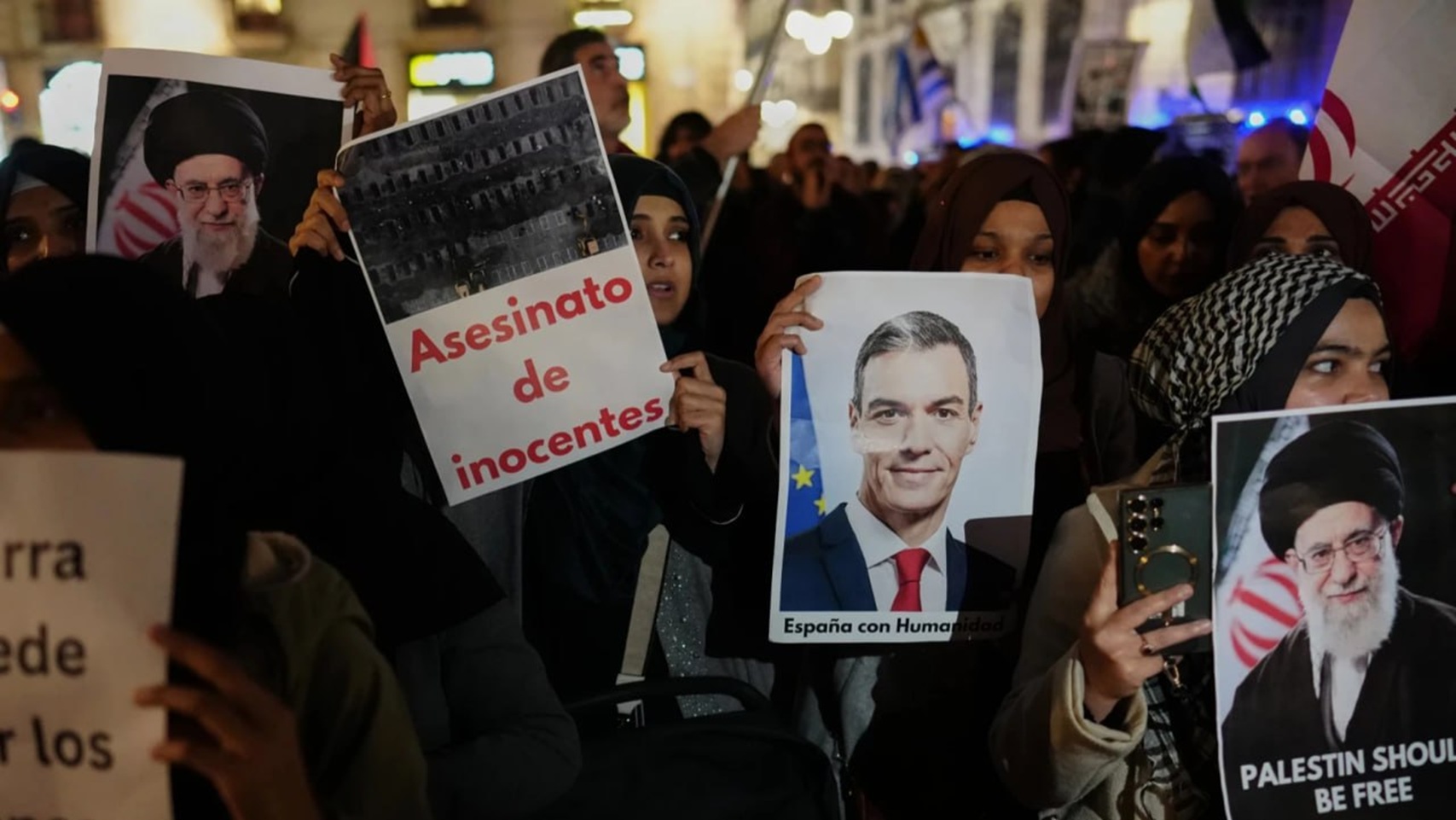
Compounding the narrative vacuum is the erosion of honor and international law, specifically through the targeted assassination of Iran’s leadership. In the architecture of just war theory, the decapitation of a state’s leadership on the outset of conflict is viewed not merely as a tactical strike but as a breach of sovereign norms. By prioritizing military objectives over diplomatic protocol and legal standards, the US and Israel have placed themselves in a deficit of credibility. This hypocrisy is starkly illuminated when contrasted with Western objections to Russian conduct in Ukraine. US officials have accused Russia of providing Iran with intelligence on US troop locations. If one accepts the premise that Moscow possesses the capability to locate American personnel across vast distances, it logically follows they possess even greater intelligence capabilities regarding the Ukrainian president, who sits merely 300 miles from Moscow. Why, then, has President Putin not targeted President Zelenskyy? The only bulwark against such an action is the remaining respect for honor and international law. By assassinating the Iranian leader, the US and Israel dismantle this bulwark, setting a precedent that removes the taboo against targeting heads of state. If the US claims the right to eliminate foreign leaders, it cannot logically object when other powers claim the same right. This optical contradiction shreds any remaining legitimacy, making it impossible to frame the conflict as a defense of law rather than an exercise in raw power.
Furthermore, the conduct of the air campaign has triggered a moral crisis that alienates global opinion. Allegations of double-tap strikes targeting civilian infrastructure, including reports of significant casualties among school girls, evoke tactics associated with non-state terrorist organizations rather than established democracies. The United States has long weaponized human rights discourse as a geopolitical tool, distinguishing its military conduct from adversaries through a claimed commitment to proportionality and civilian protection. When images emerge of mass civilian casualties, particularly involving children, that distinction vanishes. The resulting moral crater makes the production of a positive war narrative impossible. In the information age, every damning image is eternalized, serving as recruitment material for the adversary and a source of domestic dissent. A superpower cannot claim to uphold civilization while employing methods that the world associates with barbarism.
Perhaps the most critical strategic miscalculation is the underestimation of the “rally-around-the-flag” effect within Iran. External aggression has a unique capacity to silence internal dissent and unify a fractured populace against a common enemy. This phenomenon is evident in the response of prominent Iranian intellectuals who typically oppose the government. Figures such as Abdolkarim Soroush, known for their critical stance toward the administration, have publicly backed the military in the face of foreign bombardment. Soroush has urged citizens to remain alert against foreign threats, framing neutrality as ignorance and calling for national unity against destruction. This shift underscores a fundamental misunderstanding by Washington: bombing a nation does not liberate its people; it often forces them to choose between their government and their sovereignty. By attacking the state, the US has inadvertently validated the government’s narrative of resistance, turning potential allies within Iran into defenders of the nation.
Ultimately, the Trump administration faces a conflict where the metrics of success are inverted. The military machine is capable of inflicting immense destruction, and in a narrow sense, it can win every battle. It can degrade infrastructure, eliminate commanders, and dominate the skies. However, victory in war is defined by the political outcome that follows the cessation of fire. If the cost of that destruction is the collapse of international law, the loss of moral honor, and the unification of the enemy population, then the military success is pyrrhic. History demonstrates that wars fought without a sustainable narrative and without adherence to the norms of honor inevitably turn against the aggressor. The United States may possess the firepower to level cities, but it lacks the political capital to hold the peace. In this theater, the superpower is poised to demonstrate a tragic lesson: that one can conquer the land, destroy the army, and still lose the war.