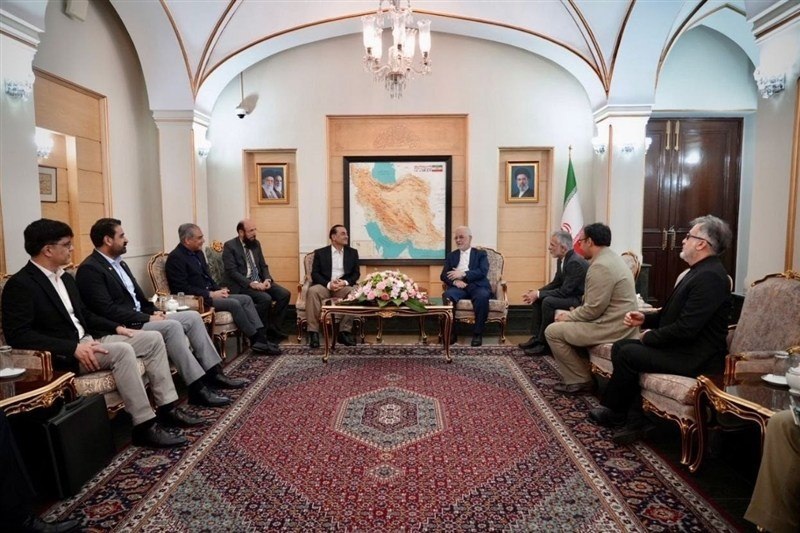
The recent signing of the Mecca Joint Defence Agreement by Saudi Arabia, Turkey, and Pakistan has sent ripples through the geopolitical landscape of the Middle East. Initial reports suggesting that Iran had been invited to join this newly established security alliance sparked immediate speculation regarding Tehran’s next move. However, the Iranian government has since formally clarified the situation, denying that it received any formal invitation to join the pact. Instead, Tehran confirmed that proposals have been made to hold talks with the three countries regarding wider regional security. This crucial distinction underscores a fundamental reality: Iran is highly unlikely to simply join the Mecca Accord as a subordinate participant. Rather, Tehran is positioning itself to be a founding architect of an entirely new regional security framework.
 The shift in narrative was swift and deliberate. Following initial comments by Mehdi Rahimi, head of the Iranian parliament’s news agency, who suggested Tehran had received an invitation and was considering the offer, the Iranian Foreign Ministry moved to set the record straight. Foreign Ministry spokesman Esmail Baghaei explicitly dismissed the claim of a formal invitation. He clarified that while no such invitation was extended, proposals for discussions with the three pact members on broader regional security issues have indeed been made and are currently under consideration. This semantic but strategically vital correction prevents Iran from being framed as a nation waiting to be admitted into a club built by others.
 At the heart of this diplomatic maneuvering is a matter of strategic dignity and leverage. As Iran’s top security chief, Mohsen Rezaei, has clearly articulated, Iran must be a founding member of a regional security architecture, not merely join an arrangement where it did not set the terms and was kept in the dark regarding its content and conditions. For Tehran, accepting an invitation to an already finalized pact would be perceived as a profound diplomatic concession. It would implicitly validate a framework that was designed without Iranian input and could potentially be weaponized to contain Iranian influence. Iran’s objective is not to be a rule-taker in a security order dictated by others, but a rule-maker in one it helps construct.
This stance is not just rhetorical; it is grounded in a clear historical precedent regarding how security architectures are currently being built in the region. Before the three nations signed the trilateral Mecca Agreement, Saudi Arabia and Pakistan had already established a standalone bilateral defense agreement. Similarly, Turkey and Pakistan had signed their own separate security deals. The Mecca Agreement was subsequently developed and signed as a distinct, third agreement among the three powers, not merely as a formal extension of the initial Saudi-Pakistani bilateral framework. This pattern demonstrates that regional security in this part of the world is often forged through overlapping, distinct bilateral arrangements that later converge, rather than through the top-down expansion of a single multilateral bloc.
 Applying this precedent to Iran’s current strategic calculus reveals the most probable path forward. The likely scenario is not Iran seeking accession to the Mecca Accord, but rather Iran and Pakistan signing a dedicated bilateral security agreement. This is driven by pragmatic, unavoidable necessities. The two nations share a long, complex border and face mutual security challenges, particularly concerning the spillover of instability from Afghanistan and the threat of cross-border militancy. A direct Tehran-Islamabad security understanding would allow both nations to address their immediate, shared border concerns without subordinating their national security policies to the broader, and sometimes conflicting, strategic objectives of Saudi Arabia or Turkey.
Furthermore, such a bilateral pact would serve as a powerful catalyst for a broader geopolitical realignment. Once an Iran-Pakistan bilateral framework is established, it will create the necessary diplomatic momentum and strategic leverage for a more inclusive, multilateral negotiation. The ultimate endgame is the development of a new, comprehensive security agreement involving Pakistan, Saudi Arabia, Turkey, Egypt, and Iran.
Unlike the Mecca Accord, this proposed architecture would be designed from the ground up to cover the entirety of Southwest Asia and North Africa. The inclusion of Egypt is particularly strategic, as it balances regional weight and ensures the pact represents a truly pan-regional consensus rather than a narrow, exclusionary alliance. In this new framework, no major regional power is relegated to the status of a secondary participant or an afterthought.
The Mecca Accord, while a significant diplomatic milestone for its signatories, is not the final word on “Middle Eastern” security. Iran’s formal denial of an invitation, coupled with its push for foundational talks, the proven precedent of incremental bilateral deal-making, and the shared security imperatives with Pakistan, points toward the inevitable creation of a new, more inclusive regional order. Tehran is not looking for a seat at someone else’s table; it is gathering the materials to build a new one.