
The most consequential fact about the current war on Iran is not the eventual fate of any government in Tehran, nor the precise terms of any final communiqué, but the manner in which coercion is now being organized. Whatever the war’s outcome, the conflict has already normalized three departures from the post–Cold War settlement: the use of a globally indispensable chokepoint as a bargaining instrument; the conversion of sanctions, blockade and frozen assets into instruments of wartime termination rather than merely prewar pressure; and the emergence of a Gulf-led diplomacy that treats American protection as one input among several rather than the fixed premise of regional security. These shifts are structural. They will not be reversed by a ceasefire, a signature ceremony, or even a change of administration.
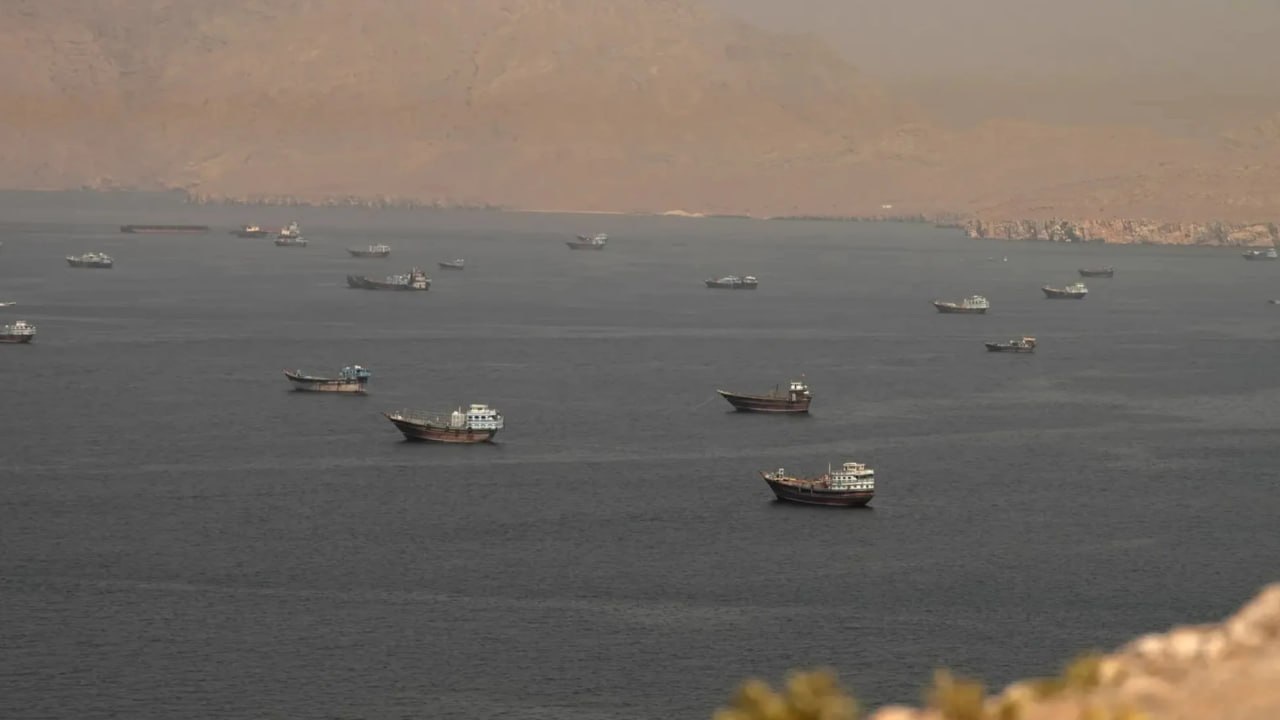
The Strait of Hormuz is the clearest example. Publicly reported Iranian conditions for reopening the waterway—an end to fighting on all fronts, an end to the American naval blockade, the release of frozen assets and compensation for war damage—show that Tehran is no longer asking merely for relief from sanctions. It is seeking a redefinition of the security architecture surrounding the strait. At the same time, reports that Iran could reopen Hormuz within seven days if military pressure and the blockade were eased reveal the deeper transformation: the waterway has become a managed switch rather than an open sea lane. Traffic data reinforce the point. When commodity transits fall from roughly fifteen vessels a day to three, and when tankers move with transponders darkened or under explicit permission, the issue is no longer freedom of navigation in the classical sense. It is conditional passage, calibrated risk and political permission. That precedent will outlast the war.
A second departure lies in the evident willingness of Gulf states to explore a common security framework involving Iran. Reporting that a Qatari proposal was discussed with President Trump on the margins of the United Nations General Assembly—and that Tehran is said to be reviewing it—should be treated as significant even if details remain fluid. For decades, Gulf security rested on the assumption that the United States would underwrite order against Iran. The new discussion proceeds from a different premise: that Iran is a permanent littoral power, that the war has imposed unbearable economic costs on all parties, and that the Gulf monarchies must seek guarantees through regional interdependence as well as through Washington. The reported aim—security assurances paired with expanded economic ties—is not a capitulation. It is an attempt to convert a devastating war into a local equilibrium before the region becomes the permanent battlefield of a superpower rivalry.
 This does not mean the Gulf is abandoning the United States. It means the American role is being renegotiated in public. The same week that Gulf leaders were reported to be weighing a Qatari framework, the president warned Tehran that it must act “before it’s too late,” suggested Washington might eventually have no chance of letting Iran “survive as a nation,” and told the General Assembly that he faced a choice between a deal that would let Iran rebuild and the rapid “annihilation” of the Islamic Republic. Whatever one thinks of the rhetoric as leverage, its effect on allies is unmistakable: it communicates that American power remains enormous but is also personalized, volatile and difficult to insure against. Gulf states are therefore not defecting from the American security umbrella; they are diversifying away from dependence on its mood.
The Iranian side has shown a parallel learning curve. Tehran’s willingness to transmit conditions through Qatari mediation in New York, while publicly insisting that it remains in a state of war, reflects an effort to turn military endurance into diplomatic currency. The conditions themselves are revealing. They are not limited to the nuclear file, although the unresolved question of highly enriched uranium remains central. They extend to Lebanon, Gaza, the Red Sea and Bab al-Mandab, to frozen assets, compensation and the legal status of the blockade. In other words, Iran is no longer negotiating as a sanctioned state seeking re-entry into the existing order. It is negotiating as a belligerent that believes it has earned the right to amend the order. The reported offer to reopen Hormuz quickly after reciprocal steps is best understood in this light: Tehran wants sequencing, recognition and guarantees before it surrenders its most effective leverage.
The coercive instruments matter as much as the diplomacy. A naval blockade imposed during a declared war and maintained through a disputed ceasefire process has blurred the boundary between sanctions enforcement and belligerent action. Likewise, the use of frozen sovereign assets as a central term of war termination turns a financial tool into a strategic hostage. Once these methods are used against Iran, they become available precedents. Other states will study them; insurers, shipping firms, central banks and energy ministries already are. The result is a world in which the plumbing of globalization—chokepoints, reserves, payment channels, insurance and maritime law—can be weaponized not only before wars but during them, and then traded as part of the peace.
The regional geometry has changed as well. The widening of the war’s geography—from the Gulf to Lebanon, Yemen, Iraq, the Red Sea and Bab al-Mandab—has demonstrated that a conflict with Iran cannot be contained by geography. But it has also demonstrated something more subtle: the region’s middle powers are no longer content to wait for Washington and Tehran to settle matters between them. Qatar’s mediation, Oman’s corridor diplomacy, Saudi anxiety over interceptor stocks and maritime exposure, European efforts to prioritize reopening Hormuz, and Chinese and Russian positioning at the United Nations all point to the same conclusion. The war has accelerated the emergence of a multipolar regional order in which the United States remains indispensable but no longer sufficient.
This is why the familiar debate—regime survival versus regime collapse—is too narrow. If the war ends with a deal, the terms will likely institutionalize Iranian influence over Hormuz transit in return for constraints on enrichment and sanctions relief. If it ends through continued coercion, the precedent of blockade, asset seizure and threatened national annihilation will remain. If it expands, the energy system, maritime insurance and great-power diplomacy will absorb shocks far beyond the battlefield. In every scenario, the war has taught states a lesson they will not forget: security can no longer be purchased through alignment alone; it must be negotiated among neighbors, underwritten by diversified relationships and priced against the risk that the world’s most important sea lanes become instruments of policy.
The tragedy is that the very instruments now being used to end the war may make future wars easier to imagine. A strait that can be closed can be closed again. Assets that can be frozen can be seized. Threats that speak of annihilation lower the threshold for the next crisis. A regional security framework involving Iran and the Gulf states could be a genuine innovation, but only if it is built on rules rather than exhaustion. Without such rules, the world after the Iran war will be more pragmatic, more regional and more dangerous—because the war will have shown that the international system’s chokepoints, banks and security guarantees are all negotiable under fire. That lesson will endure regardless of who signs, who survives and who claims victory.